
Delhi's air quality deteriorated significantly on Monday, with areas like Dwarka, Mundka and Najafgarh recording an AQI of 500, the worst this season. The city's overall AQI reached 491, triggering the implementation of the Graded Response Action Plan (GRAP) Stage-IV restrictions in Delhi-NCR. Doctors warned of health risks, urging people to wear N95 masks and avoid outdoor activities. The Supreme Court questioned the Delhi government on its anti-pollution measures and warned against scaling down preventive measures without its permission. Delhi Chief Minister Atishi accused the BJP-led central government of political maneuvering while neglecting stubble burning in states it governs. Meanwhile, the city enforced stricter pollution control measures, including a ban on truck entry and suspension of construction activities. Air purifier sales surged, reflecting the public's concern over the severe air pollution.

The city's 24-hour Air Quality Index, recorded at 4 pm every day, stood at 418, up from 334 the previous day, and it may trigger stringent restrictions under the third stage of the graded response action plan to mitigate hazardous conditions.
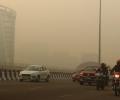
Authorities on Friday had advised people to limit outdoor activities and told government and private offices to cut vehicle use by at least 30 per cent as air quality in Delhi-NCR inched towards the emergency level amid a rise in emissions from farm fires and unfavourable meteorological conditions.

The air quality index of neighbouring areas of Faridabad, Ghaziabad, Gurgaon and Noida was recorded at 312, 368, 301 and 357, respectively.
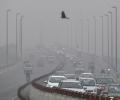
With Delhi recording air pollution levels seven to eight times above safe standards on Monday, the city government announced the return of its flagship odd-even scheme after four years anticipating further deterioration of air quality post-Diwali.

The air quality in Delhi remained poor Sunday with drop in wind speed even as authorities predicted further fall in air quality index of the national capital in the coming days.

Under the emergency plan, stringent actions are implemented based on the air quality of the city.
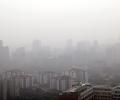
Air quality in Delhi and its suburbs dropped to the severe category again on Wednesday morning, with smoke from post-harvest paddy straw burning in neighbouring states accounting for one-third of the air pollution in the national capital.
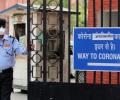
A new Omicron sub-variant has been detected in the majority of samples taken from Covid patients in Delhi as part of a study at the LNJP Hospital in the national capital.

Deputy Chief Minister Manish Sisodia also announced that during weekdays, government employees, barring those engaged in essential services, will be asked to work from home, while private offices will remain open with 50 percent capacity.

The poisonous haze has been causing significant problems for people with existing respiratory issues, according to doctors.

The Central Pollution Control Board on Monday reviewed the air quality in Delhi-NCR observing that the contribution of stubble burning may rise in the next five days with the AQI fluctuating between 'very poor' and 'severe' categories.

An improvement in the wind speed November 21 onwards might bring air pollution levels down.

The city's 24-hour average AQI was recorded in the 'poor' category at 265 on Saturday as residents flouted the ban on firecrackers in parts of the national capital ahead of Diwali, according to Central Pollution Control Board's (CPCB) data.

The city's Air Quality Index (AQI) stood at 420 at 8 am on Thursday, compared to 426 at 4 pm on Wednesday. The AQI map prepared by the Central Pollution Control Board showed clusters of red dots (indicating hazardous air quality) spread across the Indo-Gangetic plains.

The air quality in the national capital remained poor for the sixth consecutive day on Monday with stubble burning accounting for seven per cent of the capital's PM2.5 pollution.

The air quality is expected to improve further due to wind speed favourable for the dispersion of pollutants.

The city's air quality index will fluctuate between the higher end of the "poor" category and the lower end of the "very poor" category, it predicted.

According to the Graded Response Action Plan (GRAP), the air quality is considered to be in the emergency category if the PM2.5 and PM10 levels continue to be above 300 micrograms per cubic metre and 500 micrograms per cubic metre respectively for 48 hours or more.
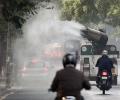
A special bench headed by Chief Justice N V Ramana, in an interim order uploaded Wednesday night, also directed the Commission for Air Quality Management in the NCR and Adjoining Areas to 'commission a scientific study of air quality based on available data of previous years bearing upon recorded levels of air pollution'.

This time, Delhi saw a sharp improvement in air quality just ahead of Diwali which can be attributed to intermittent rainfall on Friday and wind speed favourable for the dispersion of pollutants.
Acentral panel directed authorities to ban the plying of 4-wheeled diesel LMVs in Delhi and adjoining NCR districts and the entry of trucks into the capital.

If Pakistan continues with the 'Grey List' or put in 'Dark Grey' list, it would be very difficult for the country to get financial aid from the IMF, the World Bank and the European Union, making its financial condition more precarious.

A CPCB official said a number of factors were responsible for the deteriorating air quality, including vehicular pollution, construction activities and meteorological factors.

With the COVID-19 positivity rate touching 0.55 percent, the Delhi government has decided to re-impose night curfew from Monday, according to sources.
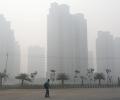
It also asked the governments of Punjab and Haryana to take immediate stringent actions to curb stubble burning and authorities in Delhi-NCR to strictly check biomass burning.

Police used mild force to disperse the crowd and five people have been detained, officials said.

The 'yellow' alert restrictions stipulate that shops and establishments of non-essential goods and services and malls will open based on odd-even formula from 10 am to 8 pm.

The dramatic reversal in the situation caught people and weather scientists unaware.
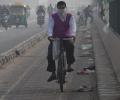
With seasonal crop residue burning, coupled with vehicle emissions, calm winds and low temperatures persisting for some time, the thick layer of toxic smog has hovered over the national capital.

NHRC issues notices to Centre and governments of Delhi, Punjab and Haryana, saying 'the state cannot leave its citizens to die due to the toxic haze.'

Kejriwal announced the odd-even scheme as part of the seven-point 'Parali Pradushan' action plan that also includes mass distribution of anti-pollution masks, mechanised sweeping and water sprinkling on the roads, tree plantation, and special plans for 12 pollution hotspots in the city.
Night curfew will continue but from 11 pm instead of 10 pm.

Amid a scare about the spread of the Omicron variant, Delhi recorded 331 fresh coronavirus cases on Monday, the highest single-day rise since June 9, and one death in the past 24 hours, while the positivity rate mounted to 0.68 per cent, according to data shared by the city health department.

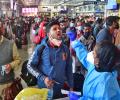
Patients and pregnant women, people out to buy essential items, and those travelling to or from railway stations, bus stops and airports will be exempted from the night curfew that kicks in at 11 pm on Monday due to rising COVID-19 cases in Delhi, according to a DDMA order.

Other Graded Response Action Plan measures like ban on diesel generators, hot mix plants, stone crushers and brick kilns, however, continue to remain in place.

Pollution levels skyrocketed by the hour in Delhi on Sunday, turning the air quality hazardous, which agencies consider unfit for inhalation even by healthier people.
In accordance with ''Level-1'' alert under the graded response action plan (GRAP), private offices will function with physical attendance of 50 per cent of the staff, barring essential categories.

Authorities alerted people to avoid staying outdoors and L-G ordered to halt all civil construction activities across the city till Sunday.

He said though there is a spike in new cases, the situation is under control as not many people are developing severe disease or require hospitalisation.
 © 2026 Rediff.com - Advertise with us - Disclaimer - Privacy Policy - Sitemap - Feedback - About us - Terms of use - Grievances